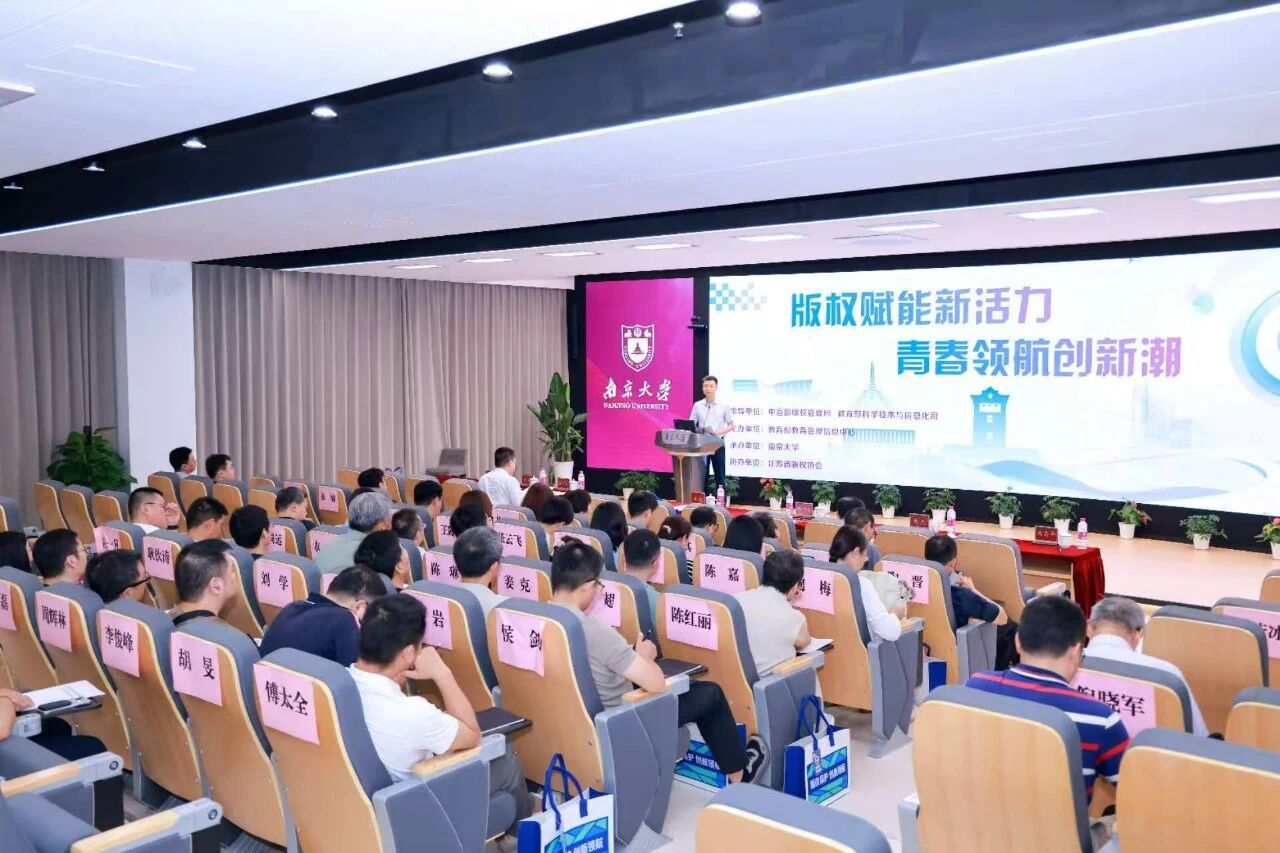
On June 25, 2026, the publicity and education event on software legalization and copyright protection for universities in East China was held at Nanjing University. Zhou Zhihua, Vice President of Nanjing University; Zhang Weidong, Deputy Director-General of the Department of Science, Technology and Informatization of the Ministry of Education; and Zhao Jie, Deputy Director-General of the National Copyright Administration of the Central Publicity Department, delivered addresses respectively. At the event, Ren Changshan, Director of the Education Informatization and Cybersecurity Division of the Department of Science and Technology, Ministry of Education, outlined the work requirements for software legalization in universities, while Zhang Hui, Director of the Law Enforcement and Supervision Division of the National Copyright Administration, explained relevant policy requirements for software legalization. Centered on the development of software legalization in the education sector, this event adopted thematic seminars and experience-sharing sessions to sort out challenges in implementation and share best practices from different regions and universities, helping the national education system improve software legalization and copyright protection.
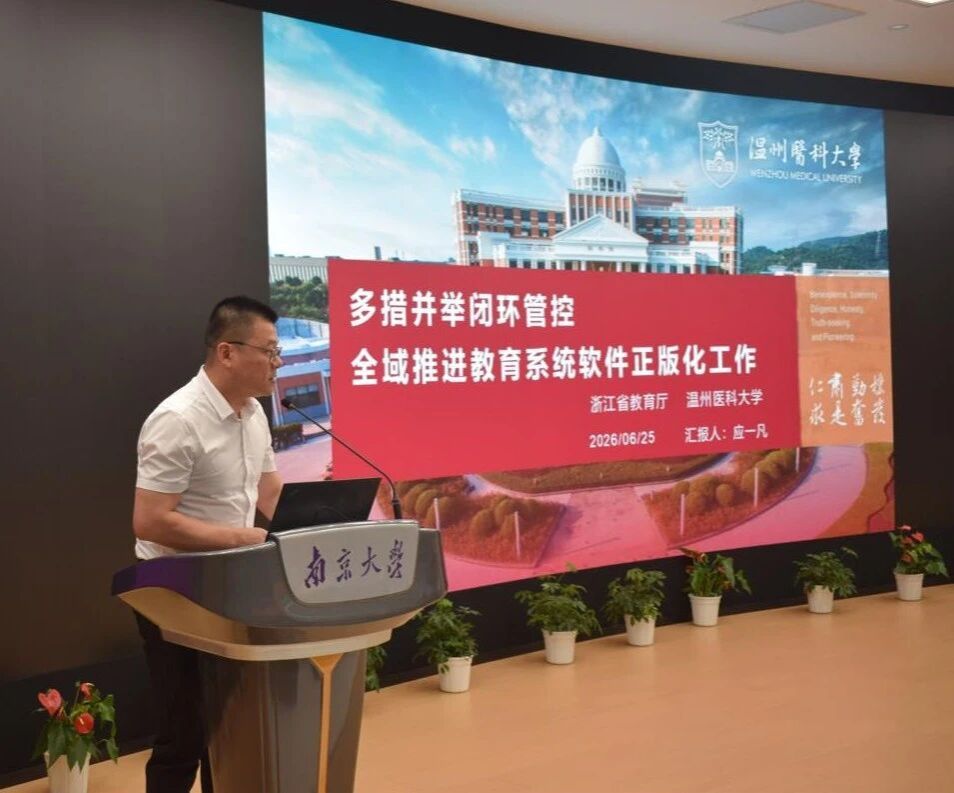
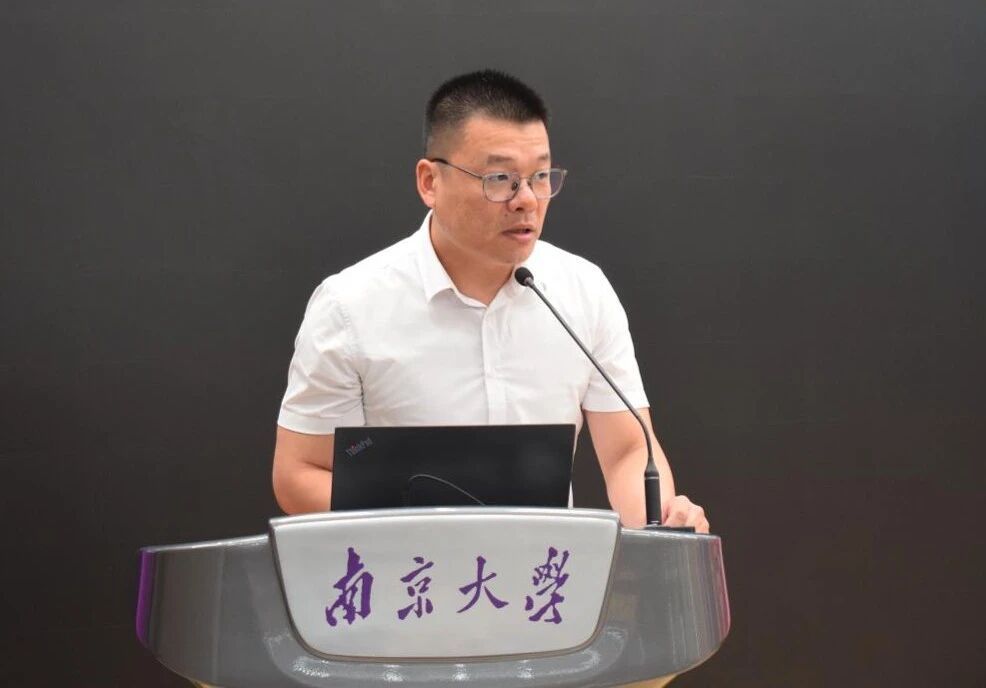
Ying Yifan, Deputy Director of the Information Technology Center of Wenzhou Medical University, attended the event on behalf of the Department of Education of Zhejiang Province and universities in Zhejiang, and delivered a report entitled Multiple Measures and Closed-loop Management: Promoting Software Legalization Across the Education System.
At the event, combining the overall arrangements of Zhejiang’s education system and the distinctive practices of Wenzhou Medical University, Ying Yifan reported the phased achievements, typical initiatives and medium- and long-term plans for software legalization across Zhejiang’s education sector, fully demonstrating the construction outcomes of closed-loop management and province-wide implementation in Zhejiang. He systematically elaborated on Zhejiang’s practices for software legalization in the education system from five aspects. First, multi-departmental coordination and full-chain management: coordinating policies and funds to advance the integrated implementation of software legalization and IT application innovation substitution. Second, province-wide inventory and archiving: establishing a dynamic and standardized software asset ledger, strictly controlling procurement access to block piracy at the source. Third, innovative provincial unified deployment: adopting the model of “provincial centralized procurement, on-site services and demonstration leadership” to achieve full coverage of provincial universities. Fourth, building a publicity and training system: carrying out tiered professional training and leveraging the publicity week to bring copyright knowledge into campuses and classrooms. Fifth, digital-enabled long-term supervision: relying on the management platform to integrate terminal monitoring, software distribution and online publicity and education.
Through these measures, Zhejiang’s education system has established an integrated digital management system covering procurement, asset management, operation and maintenance, and supervision. It has effectively mitigated hidden risks of cybersecurity incidents and copyright disputes, and created a replicable and promotable model of software legalization for the education industry. In addition, Deputy Director Ying Yifan systematically introduced the specific practices of Wenzhou Medical University from four dimensions: consolidating responsibilities and improving mechanisms, strengthening publicity and education to raise awareness, conducting comprehensive inspections in accordance with strict standards, and enabling long-term management through technology.
Moving forward, the Department of Education of Zhejiang Province and Wenzhou Medical University will fully implement the spirit of this conference and continuously improve the quality and efficiency of software legalization. They will refine the three-level collaborative working system covering provincial, municipal and university authorities, build a digital asset management platform for the full life cycle of software, and promote the deep integration of software legalization and IT application innovation substitution. Through standardized, digitalized and long-term closed-loop management, they will boost intellectual property protection and cybersecurity development for the education system across Zhejiang Province.