The year 2025 has been designated as China's "First Year of Smart Education," with artificial intelligence technology reshaping the landscape of "future education." Recently, the Zhejiang Provincial "Artificial Intelligence + Education" Promotion Conference was held in Hangzhou, where our university was among the five institutions to sign on-site agreements for artificial intelligence industry-academia-research collaboration in Zhejiang Province.
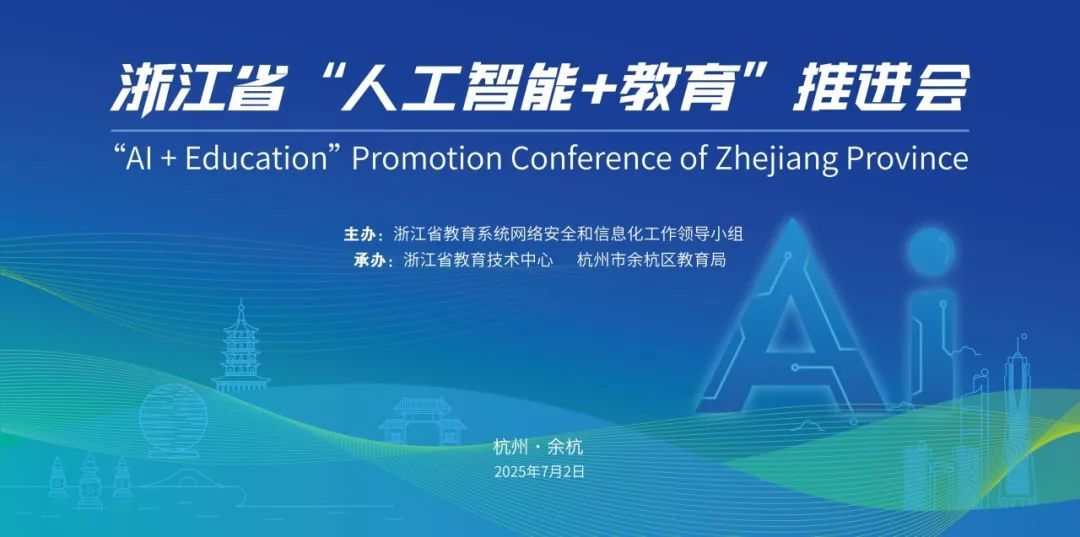
At 9:00 a.m. on July 2, the "Artificial Intelligence + Education" Promotion Conference and Application Exhibition—hosted by the Cybersecurity and Informatization Work Leading Group of the Zhejiang Provincial Education System—took place in Hangzhou. Centered on the theme "Deepening the Effectiveness of Industry-University-Research-Application Integration to Empower New Productive Forces," the event drew participants from provincial government agencies, colleges and universities, primary and secondary schools, enterprises, research institutes, as well as experts, scholars, and entrepreneurs.
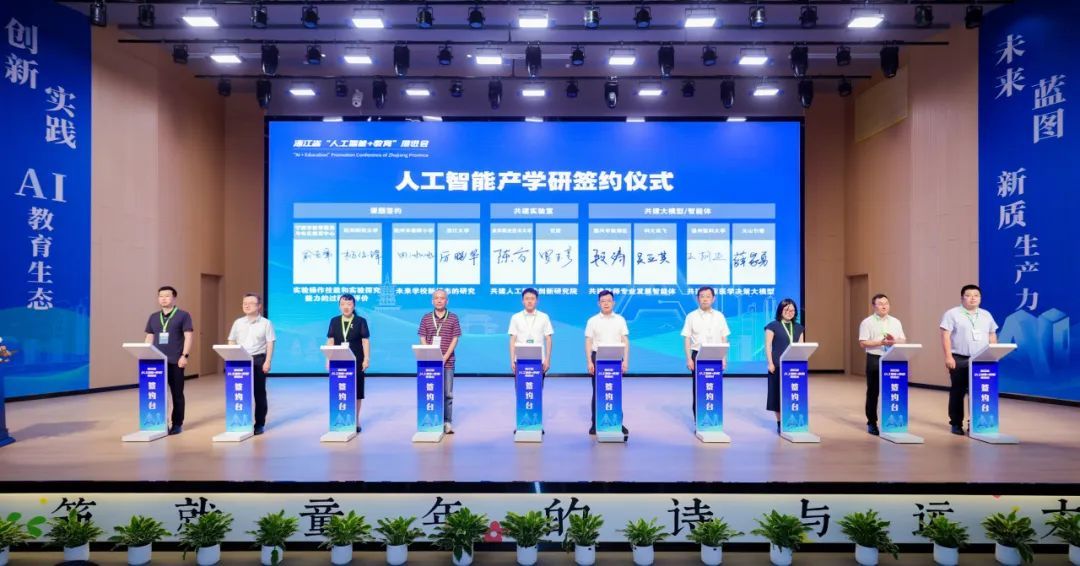
During the opening ceremony, the Zhejiang Artificial Intelligence Industry-University-Research Alliance was officially unveiled. Led by the Zhejiang Provincial Educational Technology Center, the alliance was co-founded with universities, primary and secondary schools, enterprises, and local governments across the province. As one of the five entities signing on-site for artificial intelligence industry-academia-research cooperation in Zhejiang, our university took the stage to sign a collaboration agreement with Volcano Engine, focusing on joint development of a large model for clinical medical decision-making. The other four partnerships include: Ningbo Technology Center with Hangzhou Normal University; Hangzhou Chunhui Primary School with Zhejiang University; Jinhua Polytechnic with Baidu; and Nanhu District of Jiaxing with iFlytek.
Under the framework of this cooperative initiative, both parties will leverage Volcano Engine’s strengths in large model technology and intelligent agent technology, alongside our university’s profound expertise in clinical medicine, teaching, research, and talent development, to achieve complementary advantages. The collaboration will focus on developing and applying clinical decision-making large models, aiming to create intelligent tools that assist in clinical diagnosis, optimize treatment plans, and enhance medical service efficiency. It will also provide an innovative practice platform for nurturing future medical professionals with exceptional AI literacy.
This signing marks another significant milestone in our university’s integration of artificial intelligence and medical education. Previously, our university was selected as a "Zhejiang Provincial Pilot University for Artificial Intelligence Education" and a "Zhejiang Provincial Pilot University for AI-Enabled Teaching Reform," accumulating a solid foundation and rich experience in intelligent education. Seizing this collaborative opportunity, our university will officially launch the HiAgent intelligent agent platform, which, guided by scenario-specific needs, will accelerate the development and application of intelligent agent technology. This platform will offer intelligent support for teaching, research, and management, further boosting the university’s innovation capacity and educational standards.
This conference not only affirms our university’s efforts in artificial intelligence education but also underscores expectations for its future development. The Information Technology Center will further focus on connotative development, deepen intelligent education and university-enterprise collaboration, advance AI integration in medical education, and contribute to building a world-class university with first-class disciplines and the high-quality development of teaching.